

Have you ever just paddled out into the surf only for your stomach to start churning like a faulty cement mixer? Trident is sure you have. Definitely happened to us. Just last week in fact. Anyhow, in your case, dear reader – your churning guts could simply be from the sketchy breakfast burrito you bought at the Engen in the CBD en route to your surf.
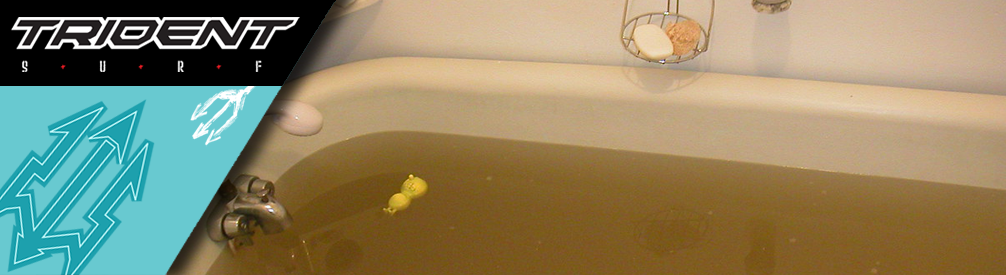
dirty water by Duncan Creamer
On the other hand… your stomach twirling like a past-their-prime exotic dancer round a greasy pole could be for an altogether more sinister reason… Dum dum DUM!
The very waters you’re surfing in could be poisoned.
Now, Trident is not Willem Dafoe. We do not claim to be a scientist as some people claim to be something of a scientist themselves. We’re no expert on water science and safety, and although this article is written under the auspices of Surf Science, all such articles is written by the layperson for the layperson. Power to the people we say, Viva! Nevertheless, we do know a little. And in this instance, we will categorise water quality issues into two samples: organic contaminants and inorganic contaminants.
A third category should logically exist; that of combined organic contaminants and inorganic contamination. However, heaven help us – surfing in waters like that is simply too horrifying to contemplate. We don’t live near Point Road in Durban after all, thank goodness.

Photo courtesy of FloMotion SA.
So here’s the thing. Most of us automatically think organic contamination is preferable. But slow down there, Hoss. Think about all those shark attacks in Port St Johns. The attacks were as always, initially just blamed on the evil, bloodthirsty nature of all sharks, ruthless killing machines without an iota of mercy. But sharks are animals like any other. They’re attracted to prey, and signs of prey. Like the smell of blood. From the ritual ancestor ceremonies involving the bloodletting of cattle on the beaches near Port St Johns. Yes. Exactly.
Would you surf near an abattoir? We think not.
Nor would you like to surf near a storm drain. During heavy rainfall and subsequent flooding, the average storm drain will discharge literal tons of organic (and inorganic waste into the ocean). Dead rats, sewage, gogga’s of every shape and description, the corpses of domestic and wild feral animals trapped in the drains – it’s like The Endless Summer meets that bloody elevator scene in The Shining.
You get the picture. Now, inorganic contaminants? Oil spills. Plastic pollution. Chemical dumping. It’s no less a horror story than the above, although more like The Endless Summer meets Some Movie about Petrol.
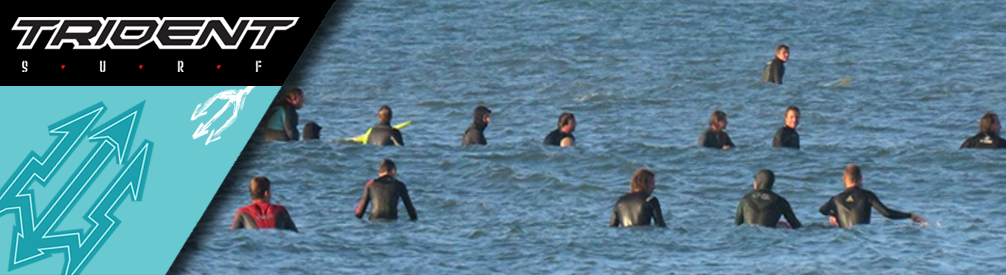
Photo courtesy of Millers Local.
There’s a little off the way surf spot in Trident’s stomping grounds named Smelly Creek. Now, first off – who in the name of Neptune’s nipples would want to be a local at a spot named Smelly Creek? It works in similar conditions to Bruce’s Beauties, but few ever venture out there to surf. It’s kinda in an industrial area, and if its name didn’t give it away already, said industrial area smells putrid. Like if Chernobyl and a pile of burning tyres got all lubed up with turpentine then had a love child. Surfing there may gift you with uncrowded, barrelling beachbreaks, but it would also gift you with a chemical skin peel so severe you’d be able to count the tendons in your face.
Tune us what you’ve experienced surfing in filthy water in the comments.
