

Folks – we’re not gonna sugarcoat it. In all the Surf Science articles Trident has tirelessly penned over the years, nothing has come close to the sheer brutality of the hard science of this week’s article. It’s not a fluff piece nor will it be easy for the layperson to read – but damn it, that won’t deter us. We’re all for journalistic integrity, particularly when it comes to articles involving the intense physics of surfing. So today let us brave all kinds of scientific tightropes as we delve into the intricacies and quantum physics of wave calling.
Trident has fearlessly and selflessly sacrificed comfort, time, dignity, sanity and water time to experiment with various methods of wave calling. We have meticulously studied, measured and recorded the results, all in the name of surf science. So let us proceed with our findings as follows:
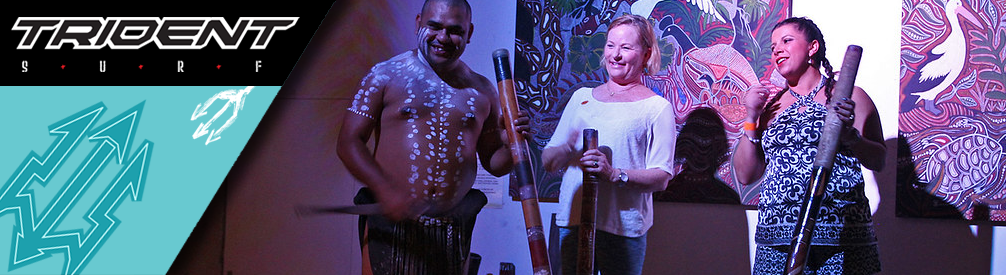
“didgeridoos” by scott1346 is licensed under CC BY 2.0.
The didgeridoo.
Let’s go ahead with some serious cultural appropriation here. Firstly, we need to disclose that in the name of practicality, Trident only had access to South African waters. Therefore our results are conclusive only in this part of the world. With that being said, our findings in terms of using a didgeridoo, a native Australian musical instrument to call waves, were as follows: we were able to produce precisely ****all waves. Although it’s uncertain whether this uselessness was due to the general foreign nature of said instrument or the fact it was invented by Australians specifically, the effectiveness of this method was about as useful as trying to prevent load shedding by meditating.
The surfboard sacrifice.
Trident picked a beach at dusk, gathered driftwood, Blitz firelighters and a brand new Al Merrick shortboard (no, it didn’t belong to us) and set the whole mess ablaze. Apart from smoke inhalation and possibly permanent lung damage from the highly toxic fumes emitted by burning polyester and resin, this method [produced precisely ****all waves. However, it may just be that an EPS board will produce different results in terms of waves. The organ damage will no doubt be similar, but only after we stop coughing up our own blood and lung tissue will we try this same experiment with an EPS foam board.
The, er – grom sacrifice.
Full disclosure: without going into details before our trial – the cops stopped us before we managed to really go ahead with this experiment. So the results, although at first glance are inconclusive – this did indeed produce ****all waves.

The spiritual approach.
Some say spirituality and science don’t mix. However, that’s just unscientific according to Trident. Experiment. Use the Scientific Method. Pray. Chant. Meditate. (Hey, it may not work for load shedding but it works for waves). Trident tried it all. The results this far? ****all waves.
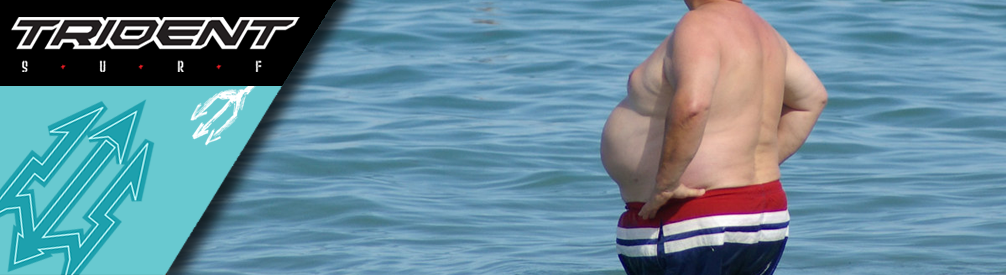
“Baigneurs” by PIMboula is licensed under CC BY-NC-ND 2.0.
Getting mates to flap about in the water to create some ripples.
Get your largest friend to sacrifice their own surf time and send them out to sea. Equip them with something like water wings, or big planks of wood or the like. Perhaps even just get them to flap their arms manically. Whatever it takes when the waves are flat, someone’s gotta work hard to get something going. We have tried this over and over over the years. What has this method achieved this far? ****all waves.
The results are not what we want folks. Yet Trident remains undaunted. Do you have any other additional methods of producing waves? Tjoon us in the comments.
