

Unless you’ve only recently relocated to Earth or you have the intellect of braai wood, the simple answer to that question is: “a wetsuit keeps us warm in the water.” Yes, but how exactly? Trident investigates.
The Dry suit – precursor to the wet suit.
The earliest functional archetype of the modern wetsuit was imaginatively named the “dry suit”. The obvious name notwithstanding, the fundamental aspect of a dry suit is significant in comparison to the modern wetsuit. The point of a dry suit back in the 1800’s was to ensure no water could get in the suit at all, whereas one of the pertinent aspects of wetsuit design is actually allowing some water into the suit. Dry suit versus wetsuit. Easy. One has to assume for example, that peeing in a dry suit was phenomenally less pleasant than doing so in a modern wetsuit.

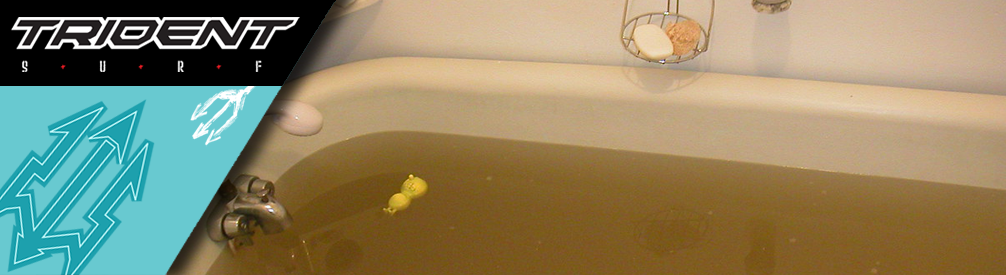
Anyhow, wetsuits are designed to allow some water in as one’s own body heat plays its part in warming the water that invades your suit considerably. Another toasty layer of insulation. Like, if you sit in a cold bath long enough, your body heat will eventually warm the tepid water by a degree or two. So in colder climates this isn’t really recommended, unless you’re a massive fan of hypothermia. And of course, without a wetsuit to seal the water in, your body heat warming water is pretty much pointless. But feel free to experiment, we say.
Wetsuit materials – the science and the magic.
Modern wetsuits are generally made of neoprene and spandex, and occasionally rubber as well. In other words, we surfers therefore have much in common with the X-Men and sadomasochists. Minus the whip and/or claws. Whips. Claws. Which come to think of it – would really come in handy in crowded lineups. We digress.
Neoprene is essentially tiny little bubbles of air trapped within a synthetic substrate. Think of it sorta like bubble wrap if instead of easily-popped plastic, it was manufactured instead with stronger materials. Neoprene also provides a level of buoyancy. Coz, of like, you know – the air in them there wetsuits pardner. However, as anyone frothing to paddle out when the surf is cooking will tell you, neoprene is a pretty weak material. Try rushing to put a wetsuit on and tearing the living balls outta your tried and tested 3/2 before you’ve even paddled in. Trident’s top tip: put a wetsuit on slowly and carefully. The few extra minutes will ensure a greater life expectancy for your suit.
And this is where spandex comes in. Not just the darling of 1980’s aerobic instructors, spandex is sandwiched over neoprene to make it slightly more resistant to wear. Great success!
Wetsuits. “But wait! There’s more!” Bonuses.
So buoyancy, warmth – and here’s another plus; sun protection. Sure, nobody wears a 3/4 in 25 degree water unless they have the fragile constitution of a 97 year old on their deathbed. Yet wetsuits have a bonus side effect of protecting the skin from UV rays. This is why surfers are often recognisable to one another out the water with the trademark brown face and severely contrasting neckline tan resembling a failed lynching attempt.
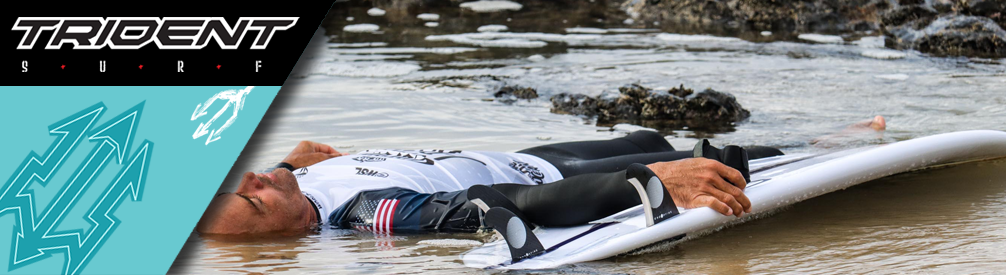
Yet another bonus of a wetsuit is the slight protection it offers against abrasive surfaces. Sure, it won’t prevent injury with the sharpest of rocks nor will stop an angry local’s oyster knife from penetrating your thorax. Nonetheless, Trident would prefer to be wearing a wetsuit than not when rag-dolled over a coral reef or mussel-encrusted reef.
In conclusion, a wetsuit goes beyond just surfing in its scope and usefulness. No wetsuit lasts forever, but we suggest investing in the best quality version you can afford. After all, buying a second hand budget version with more holes than fishnet stockings will be about as useful as, well, wearing fishnet stockings while surfing.
