

At least when it comes to measuring wave size that is.
A fellow surfer recently remarked to Trident that a photo he had seen of a dude getting a solid, overhead round pit in Durban was 3 foot. After recovering from all of our brain circuits being momentarily fried, we were quick to respond with some choice sarcastic comments, the highlight of which was a variant of the following:
“I dunno about you bru, but it’s a while since I’ve watched Lord of the Rings. According to Tolkien, hobbits ranged from 2 to 4 feet tall. Now, assuming we’re dealing with the shortest hobbit in Middle Earth; I’m pretty sure everyone in Durban would’ve noticed the one and only furry-footed pointy-eared halfling paddling out at New Pier.”
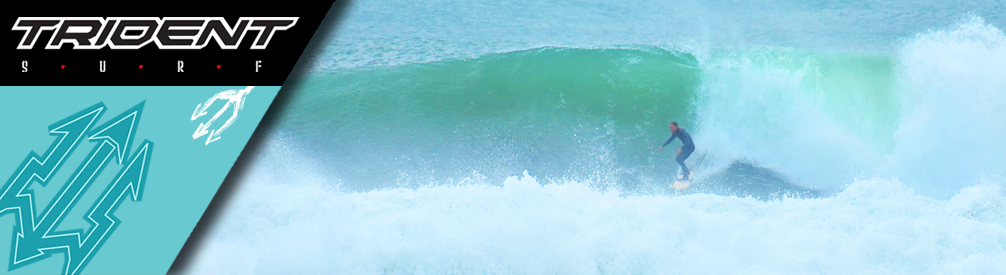
Sigh. This author is an inch or two shy of six feet tall. Yet, even so, I wouldn’t claim a solid overhead wave as much more than 4, maybe 5 foot. And I’d STILL be wrong. Partly because South Africans are apparently not conditioned to identify wave size based on the imperial system, and partly because of ego. Here’s the thing, of all possible surf science – measuring waves should be the simplest and most accurate aspect. However, wave size measurement is the furthest thing from science. It’s all emotive. And it seems to be based on how hardcore you think you are in terms of under-calling it – or how kak bang you are.
Some weirdos (like the Hawaiians and my close friends) measure waves from the back. ‘Coz, you know – there are surfers among us who prefer surfing the back part of a wave rather than its glassy front. Honestly – what the hell people. Measuring wave size from the back is about as pointless as Eskom powering an electric chair. Nevertheless, we’ll grudgingly accept it’s easier to check wave size from the back. But here’s a fact: 1 foot is 30cm, give or take. Yes – to all those ignorant of the imperial system – 1 foot is the size of a standard ruler the teacher used to klap you with when you were daydreaming about surfing instead of doing your algebra. 1 foot is tiny. I’d wager an actual 1 foot wave face is nigh impossible to surf, unlike what most of us would call 1 foot slop. Regardless, measuring from the back of the wave can make sense.
However, knowing now that 1 foot is 30cm, Trident has often seen the backs of waves on an average day reach 90cm – 120cm (accurately 3 – 4 foot). Yet, would any surfer call it 3 – 4 foot? Not a donner. It’d probably be 2 foot, maybe 3 foot on the face according to most of us.

“My garden gnome” by NicestGuyEver is licensed with CC BY-NC-ND 2.0. To view a copy of this license, visit https://creativecommons.org/licenses/by-nc-nd/2.0/
Also, at a wave like Teaupoo, it can be 2 foot from the back while the front of the wave resembles the entire south pacific ocean trying to swallow you whole. So, measuring waves from the back is kinda fruitless. If one is measuring from the back of a wave, a 2 foot wave at Muizenberg does not equal a 2 foot wave at Pipeline. (Hawaiian Pipeline, not PE’s Pipe which is named after a drainage pipe and not round, spitting barrels).
These days it appears to be fairly common to estimate wave size based on body parts. “It’s chest-high”, or “head-high.” This takes some of the guesswork and the emotion outta it, so Trident reckons it’s cool. Until you consider a surfer’s height once again. A five foot six guy will have a very different interpretation of a head high wave compared to a six foot four guy, who’s probably call it “piel-high.”
Trident has had an American friend call what we thought was a solid 4 foot day “six foot plus fer sure, Dude”. So, we at Trident give up. Are South Africans stupid? Or are we just damn hardcore? Or do we simply not know how to convert the metric system accurately? Or is it all three? Answers in the comments please.
