

Onshore and offshore winds. Wind directions all around the compass, and these two are the breezes that matter most to water enthusiasts. Sailors, boaters, divers, swimmers, triathletes, pirates, krakens, Atlanteans – all servants of the seas are affected by the direction of the wind, and surfers are of course no exception.
Onshore and offshore winds are thus to an extent, surfing’s ying and yang. Surfing’s day vs night, left vs right, up vs down, the original Star Wars trilogy vs everything else featuring light sabers.
Wind direction. Available in 360 degrees.
For surfers, onshore winds can conjure up extremely negative connotations, while offshore winds are seen as ideal. Nevertheless, these two wind directions should be viewed as balance. If a surfer hears the term offshore, immediately they’d imagine clean, groomed waves of any size, airbrushed to dreamy perfection by winds blowing from the land. Conversely, say the term onshore and many surfers immediately think washy, messy water the colour and smell of what goes down the household drain.
Both images would be right as well as wrong. The balance of opposites, once again. So lets begin with defining each term unambiguously. An onshore wind is also known as a sea breeze, although it applies to any body of water. Not just the ocean. Lakes, rivers, inland seas – even a puddle in a pothole – can have an onshore or offshore wind Trident reckons. Anyhow, onshores blow from water onto land. Whereas offshore winds, or land breezes blow, in the exact opposite direction; from land to sea. Simple.
If you surf, these binary winds should be nothing new. However in our modern world of anything goes, winds too are anything but binary. Slightly cross-shore, slightly onshore-cross, strong offshore-cross-spam-eggs, ham and spam – the gamut of wind directions. The variations in wind directions sort of sound like dog breeds. Or indeed, angry winds. Cross shore? See what we did there?! Please forgive us – we’re trying to liven up an otherwise dry Surf Science article with these desperate attempts at humour.

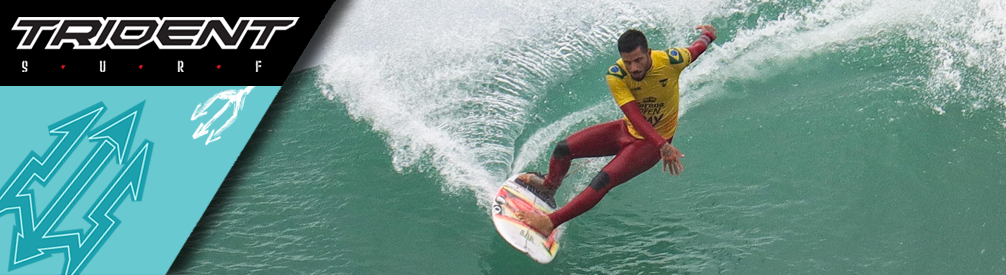
Anyway; offshore winds do not absolutely guarantee great waves just as onshore waves can often be super rippable. Just ask the Brazilians when they’ve finally landed in the flats after their full rotation airs. Or young Kelly, Jordy, the original Fletcher brothers, Griff Colapinto, Julian Wilson and Josh Kerr who launch higher than the patrons at a trance music festival. Some offshore days feel like the gentle caress of wind nymphs when you face the shore. While strong offshores feel like you’re being beaten with a baseball bat made of air. Some onshore days present fun, gentle crumbly days. Other onshore days resemble Poseidon flushing his mighty toilet after Thai curry night.
Onshore winds help airs, so there’s a plus for the sea breezes. Conversely, land breezes groom tubes. So ideally if someone can invent a technique for changing wind direction several times on a wave surfers would be eternally grateful. Better than wavepools. Maybe combine the process with wind farms? Lekker waves and renewable energy? The scientific possibilities are endless. You heard it here first folks, Trident is ever innovative.
Winds develop due to factors like air pressure and the difference in heat capacities of land mass and bodies of water. Unless you’re a professional meteorologist, this is already sounding like ancient Mesopotamian. So trust us when we say if we go into even more scientific detail, it’ll sound about as easy to understand as South African politicians being popular even when they have all the intellectual might of wilted lettuce.
Wind Science.
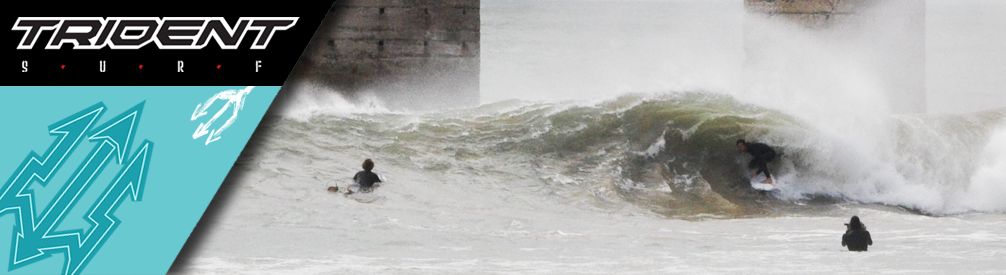
So when it comes to understanding the effect of wind direction, we need to consider the coastline we find ourselves in. For example, Trident often speaks about how the shape of the Cape peninsula offers variety in our weekly surf reports. So offshore one side is often onshore the other side. Lucky so-and-so’s. Still, if you find yourself there you have to navigate Cape Town traffic so maybe not so lucky.
Thus understanding optimal wind means also understanding your coastline. However, let’s not forget the wind strength factor either. An offshore wind can be so strong you’ll start your surf in the Eastern Cape and find yourself being blown to Marion Island. Google it, it’s part of South Africa as part of our southern territories of Prince Edward Island. Indeed, apparently these south islands are actually quite surfable there. We digress.
Anyway team, any way the wind blows – try make the most of it. That’s a line from Queen, heavily paraphrased, but still the sentiment is sound. Just enjoy what the wind does to the wave on any given day as much as you can. Trident isn’t one for strong onshores though, so those days are all yours. Generous to a fault are we.
